
Your Garage Door Shouldn't Sound Like That
You press the button on your garage door opener and instead of a smooth, quiet operation, you're greeted with grinding, squealing, popping, or rattling. It's not just annoying — those strange noises are your garage door trying to tell you something is wrong.
For homeowners in Syracuse, garage door noises are especially common. Our climate puts serious stress on moving parts, from the humidity of summer to the deep freeze of winter. Metal contracts, lubricant dries out, and hardware loosens over time. The good news is that most garage door noises point to identifiable problems, many of which can be addressed before they turn into expensive repairs or a complete door failure.
Here's a breakdown of the most common garage door noises, what causes them, and what you should do about each one.
Squealing or Screeching
A high-pitched squeal or screech when your garage door opens or closes is one of the most common complaints we hear from Syracuse homeowners. This sound typically points to one of a few issues:
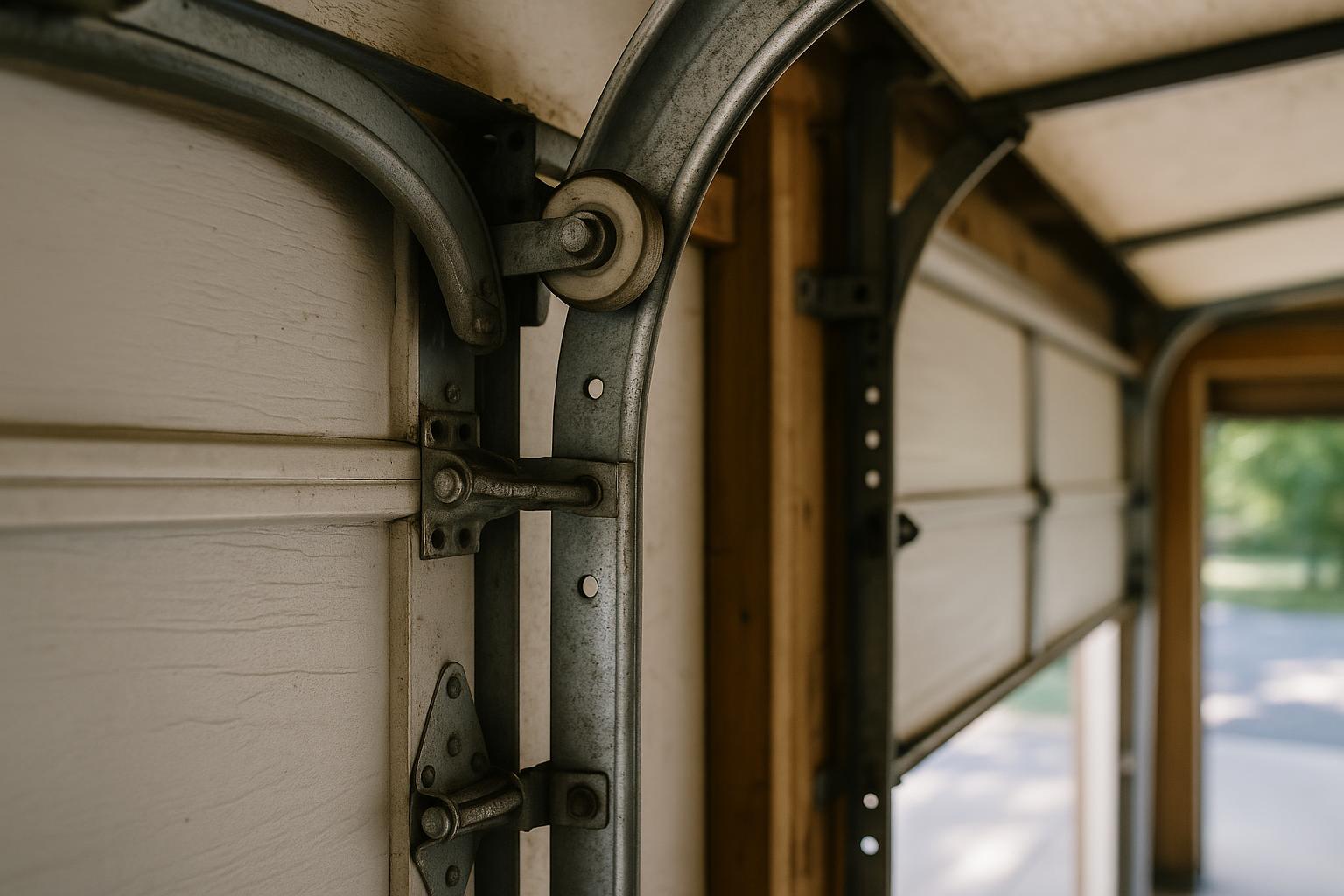
- Dry or worn rollers: Metal rollers running along the tracks without proper lubrication will produce a harsh squealing sound. Over time, the rollers themselves can wear down and develop flat spots, making the noise even worse.
- Lack of lubrication on hinges and bearings: Every pivot point on your garage door needs periodic lubrication. When hinges, bearing plates, or the torsion spring system dry out, metal-on-metal contact creates that unmistakable screech.
- Bent tracks: If the tracks that guide your door have become slightly bent or misaligned, the rollers will drag against the sides, producing a squealing or scraping noise.
What to do: Start by applying a garage door-specific lubricant (not WD-40, which is a solvent, not a lubricant) to the rollers, hinges, bearing plates, and springs. If the noise persists, the rollers may need to be replaced, or the tracks may need professional realignment.
Grinding or Crunching
A grinding noise is more serious than a squeal and usually indicates a mechanical problem that needs prompt attention.
- Worn-out gears in the opener: If the grinding sound is coming from the garage door opener motor unit mounted on your ceiling, the internal gears may be stripped or wearing down. This is especially common in older chain-drive openers.
- Rollers off track: If a roller has partially come out of the track, the door may still operate but will produce a grinding or crunching sound as it moves. This is a safety concern and should be addressed immediately.
- Debris in the tracks: Small rocks, dirt, leaves, or ice buildup in the tracks can cause grinding as the rollers try to pass over the obstruction.
What to do: Inspect the tracks for visible debris and clean them out. If the noise is coming from the opener, stop using it and call a technician. Stripped gears won't fix themselves and can eventually cause the opener to fail completely.
Rattling or Vibrating
A rattling sound during operation usually means something is loose. While it might not seem urgent, loose hardware can lead to bigger problems if left unaddressed.
- Loose nuts, bolts, or screws: The constant vibration of a garage door cycling up and down multiple times a day will gradually loosen the hardware that holds everything together. Hinges, track brackets, and the opener mounting bracket are common culprits.
- Loose chain or belt on the opener: If the drive chain or belt has too much slack, it can vibrate and rattle during operation.
- Unsecured opener mounting: The bracket and strut system that attaches your opener to the ceiling and the door can loosen over time, creating a rattling vibration that resonates through the entire garage.
What to do: Carefully tighten all visible nuts, bolts, and screws on the door panels, hinges, and track brackets using a socket wrench. Check the opener chain tension according to your owner's manual. If you're not sure what's loose, a professional maintenance visit can identify and fix the issue quickly.
Popping or Snapping
A sudden pop or snap when the door starts moving is a sound that should get your attention right away.
- Torsion spring issues: The torsion springs above your garage door are under enormous tension. As they age or develop weak spots, they can make popping or snapping sounds during operation. If a spring actually breaks, you'll hear a loud bang — almost like a gunshot — even from inside your home.
- Weather-related contraction: In Syracuse, where temperatures can swing dramatically between seasons, metal components expand and contract. This can produce occasional popping sounds, especially on very cold mornings when you first open the door.
What to do: If the popping is occasional and mild, especially during cold weather, it may be normal thermal expansion. However, if it's consistent or getting louder, have a technician inspect your springs and cables. Never attempt to adjust or replace torsion springs yourself — the tension involved makes this one of the most dangerous DIY garage door tasks.
Banging or Slamming
If your garage door slams shut the last few inches or bangs loudly when it reaches the fully open position, the problem is usually related to balance or the opener settings.
- Broken or weakening springs: When springs lose tension, they can no longer support the full weight of the door. The door becomes "heavy" and drops the last portion of its travel instead of lowering smoothly.
- Opener travel limits set incorrectly: The open and close limits on your garage door opener tell it where to stop. If these are set wrong, the door may slam into the floor or bang against the stop bracket at the top.
- Worn cables: Fraying or damaged lift cables can cause the door to move unevenly, resulting in one side dropping faster than the other and creating a banging sound.
What to do: Test your door's balance by disconnecting the opener (pull the red emergency release handle) and manually lifting the door halfway. Let go — if it stays in place, the balance is fine. If it drops, the springs likely need adjustment or replacement by a professional.
When to Call a Professional
Some garage door noises can be resolved with basic maintenance like lubrication and tightening hardware. But many point to underlying mechanical issues that require professional diagnosis and repair. Here are clear signs it's time to call in a technician:
- The noise is new, sudden, or getting progressively worse
- The door is visibly shaking, jerking, or moving unevenly
- You suspect a spring, cable, or opener gear problem
- The noise is accompanied by the door not fully opening or closing
- You've lubricated and tightened everything but the sound persists
At Syracuse Garage Door, we diagnose and fix noisy garage doors throughout Syracuse, Liverpool, Camillus, Fayetteville, Manlius, and DeWitt. Whether it's a simple roller replacement or a full spring and cable overhaul, we show up on time and get your door running quietly again.
Don't Ignore the Warning Signs
A noisy garage door is more than a nuisance — it's an early warning system. Catching problems at the noise stage almost always means a simpler, less expensive repair than waiting until something breaks entirely. If your garage door has started making sounds that don't seem right, trust your instincts and get it checked out. Your door — and your neighbors — will thank you.