
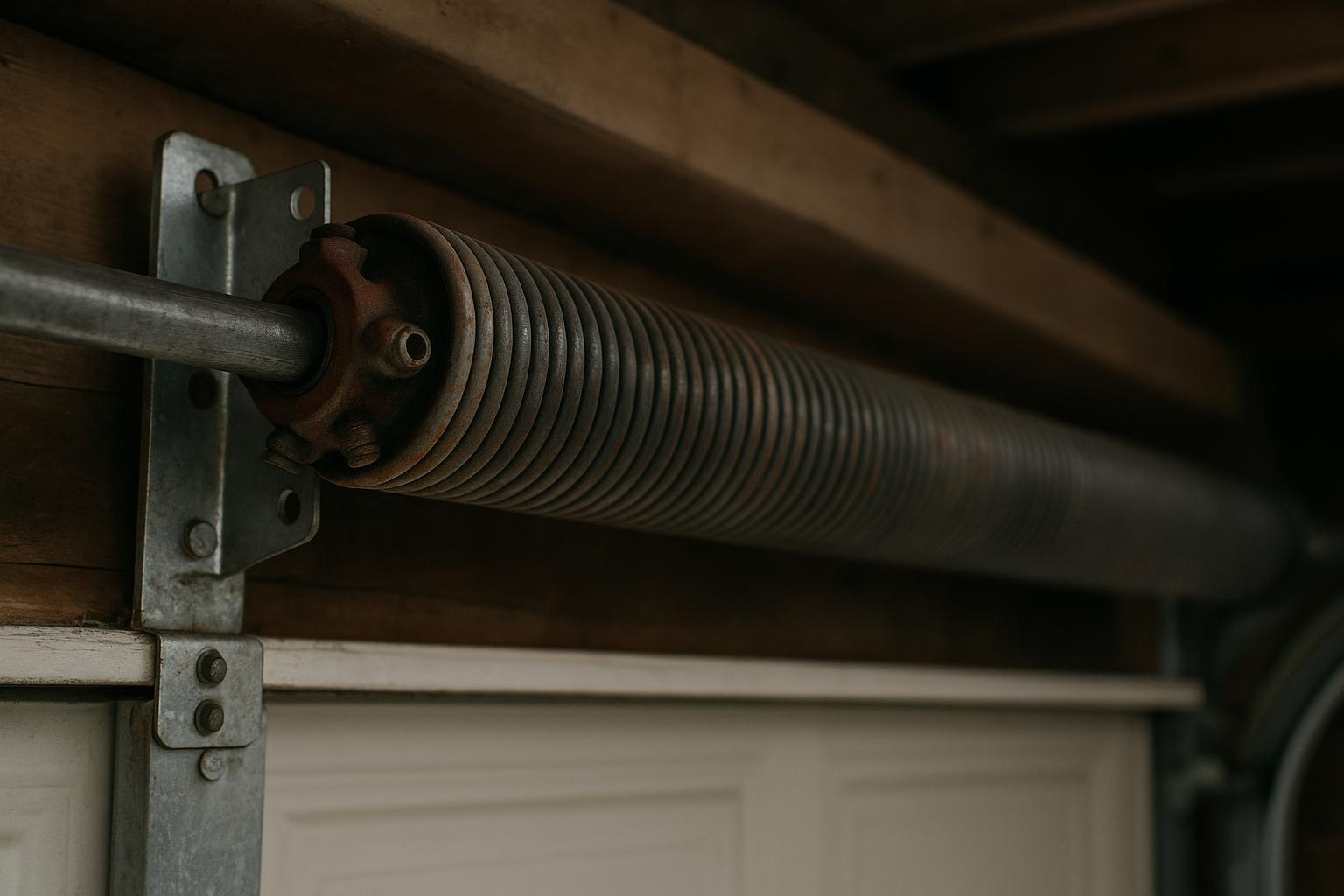
Your Garage Door Springs Are Under More Stress Than You Think
Every time you open and close your garage door, the springs do the heavy lifting — literally. A standard residential garage door weighs between 130 and 350 pounds, and the springs bear nearly all of that weight. Over time, the metal fatigues, and eventually, the springs will fail.
For homeowners in Syracuse, the combination of heavy use and harsh seasonal temperature swings puts extra strain on these critical components. A broken spring isn't just an inconvenience — it can leave your car trapped inside, damage your door or opener, and even pose a serious safety risk. The good news is that springs rarely break without warning. If you know what to look for, you can catch the problem early and schedule a replacement before disaster strikes.
How Garage Door Springs Work
Before diving into the warning signs, it helps to understand the two main types of garage door springs:
- Torsion springs are mounted on a metal shaft above the garage door opening. They use torque to lift the door and are the most common type found in Syracuse homes.
- Extension springs run along the horizontal tracks on either side of the door. They stretch and contract to assist with lifting.
Both types are rated for a specific number of cycles — one cycle being a single open-and-close operation. Most standard springs are rated for about 10,000 cycles, which translates to roughly 7 to 10 years of typical use. High-cycle springs can last significantly longer, but no spring lasts forever.
7 Warning Signs Your Springs Are Failing
1. The Door Feels Heavier Than Usual
Try disconnecting your garage door opener by pulling the emergency release cord, then manually lift the door. A properly balanced door with healthy springs should feel relatively light and stay open about three to four feet off the ground. If the door feels extremely heavy or slams shut the moment you let go, your springs are losing tension and nearing the end of their lifespan.
2. The Door Opens Unevenly or Crooked
If one side of your garage door rises faster than the other, it often means one spring has weakened more than its counterpart. This is especially common with extension spring systems that have a spring on each side. An uneven door puts stress on the tracks, rollers, and opener, which can lead to additional damage if not addressed promptly.
3. You Hear Loud Squeaking or Grinding
Some noise during operation is normal, but a sudden increase in squeaking, popping, or grinding sounds can signal that a spring is deteriorating. As the metal weakens, it may stretch unevenly or develop rough spots that create friction. Don't ignore new or worsening sounds — they're your door's way of telling you something is wrong.
4. Visible Gaps in the Spring Coils
Take a look at your torsion spring above the door. A healthy spring has tightly wound, evenly spaced coils. If you notice a visible gap or separation in the coils, the spring has already partially broken or stretched beyond its functional limit. This is one of the most obvious visual indicators that replacement is overdue.
5. The Opener Struggles or Strains
Your garage door opener is designed to work in partnership with the springs. When the springs weaken, the opener has to compensate by working harder. You might notice the motor sounds louder, the door opens more slowly, or the opener shuts off before the door is fully open. Continuing to run the opener under these conditions can burn out the motor prematurely — turning a spring replacement into a much more expensive repair.
6. Rust on the Springs
Syracuse's climate — with its snowy winters, road salt, and spring humidity — creates the perfect conditions for rust. Corrosion weakens the metal, increases friction, and dramatically shortens a spring's lifespan. If you see rust forming on your springs, it's worth having a professional assess how much life they have left. Regular lubrication can slow the process, but once rust has taken hold, replacement is usually the best course of action.
7. The Door Won't Stay Open
A garage door that slowly creeps down after you open it is a classic sign of worn springs. The springs no longer have enough tension to counterbalance the door's weight. Beyond being annoying, a door that won't stay open is a safety hazard — especially if you have children or pets who could be underneath it.
Why You Should Never Replace Garage Door Springs Yourself
We understand the DIY spirit, and there are plenty of garage door tasks that handy homeowners can tackle on their own. Spring replacement is not one of them. Torsion springs are under extreme tension, and a mistake during removal or installation can cause the spring to release violently, resulting in serious injury or even death.
Professional technicians have the specialized tools, training, and experience to replace springs safely. At Syracuse Garage Door, our technicians handle spring replacements throughout the Syracuse area every week — in neighborhoods from Liverpool to Fayetteville and everywhere in between. We know the job inside and out, and we get it done safely and efficiently.
How Often Should Springs Be Inspected?
We recommend having your garage door springs inspected at least once a year, ideally in the fall before Syracuse's freezing temperatures arrive. Cold weather causes metal to contract and become more brittle, which is why spring failures are more common during winter months. A professional inspection can catch early signs of wear and give you time to plan a replacement on your schedule — rather than dealing with an emergency on a freezing January morning.
Regular maintenance visits also give technicians the chance to lubricate the springs, check the door's balance, and inspect other components like cables, rollers, and hinges that work closely with the spring system.
What to Do If a Spring Breaks
If you hear a loud bang from your garage — like a firecracker going off — there's a good chance a spring just snapped. Here's what to do:
- Do not try to open the door. Operating the opener with a broken spring can damage the opener, the door, or the cables.
- Disconnect the opener by pulling the emergency release handle to prevent accidental activation.
- Call a professional. A trained technician can replace the spring and inspect the rest of the system for any collateral damage.
If your car is trapped inside, resist the urge to force the door open manually. A garage door without functioning springs is dangerously heavy and can cause injury.
Keep Your Garage Door Safe and Reliable
Your garage door springs work hard every single day, and they deserve a little attention before they fail. By watching for the warning signs listed above, you can avoid the inconvenience, expense, and danger of a sudden spring failure.
If you've noticed any of these symptoms — or if it's simply been a few years since your last inspection — give Syracuse Garage Door a call. We serve homeowners across Syracuse, Camillus, Manlius, DeWitt, and the surrounding communities with fast, honest, and professional garage door service. We'll assess your springs, give you a straightforward recommendation, and make sure your door is operating safely.